
Customer case · Somerset West, Western Cape
Water Where It Shouldn’t Be: A Leak Under Paving in Somerset West
A rising water bill, a meter that kept turning, and water bubbling up between the pavers beside the house. One phone call in the morning, and the leak was found and fixed that same afternoon.
Same day
From the first phone call to a fixed leak
< 2 hrs
On site, from first test to silent meter
1
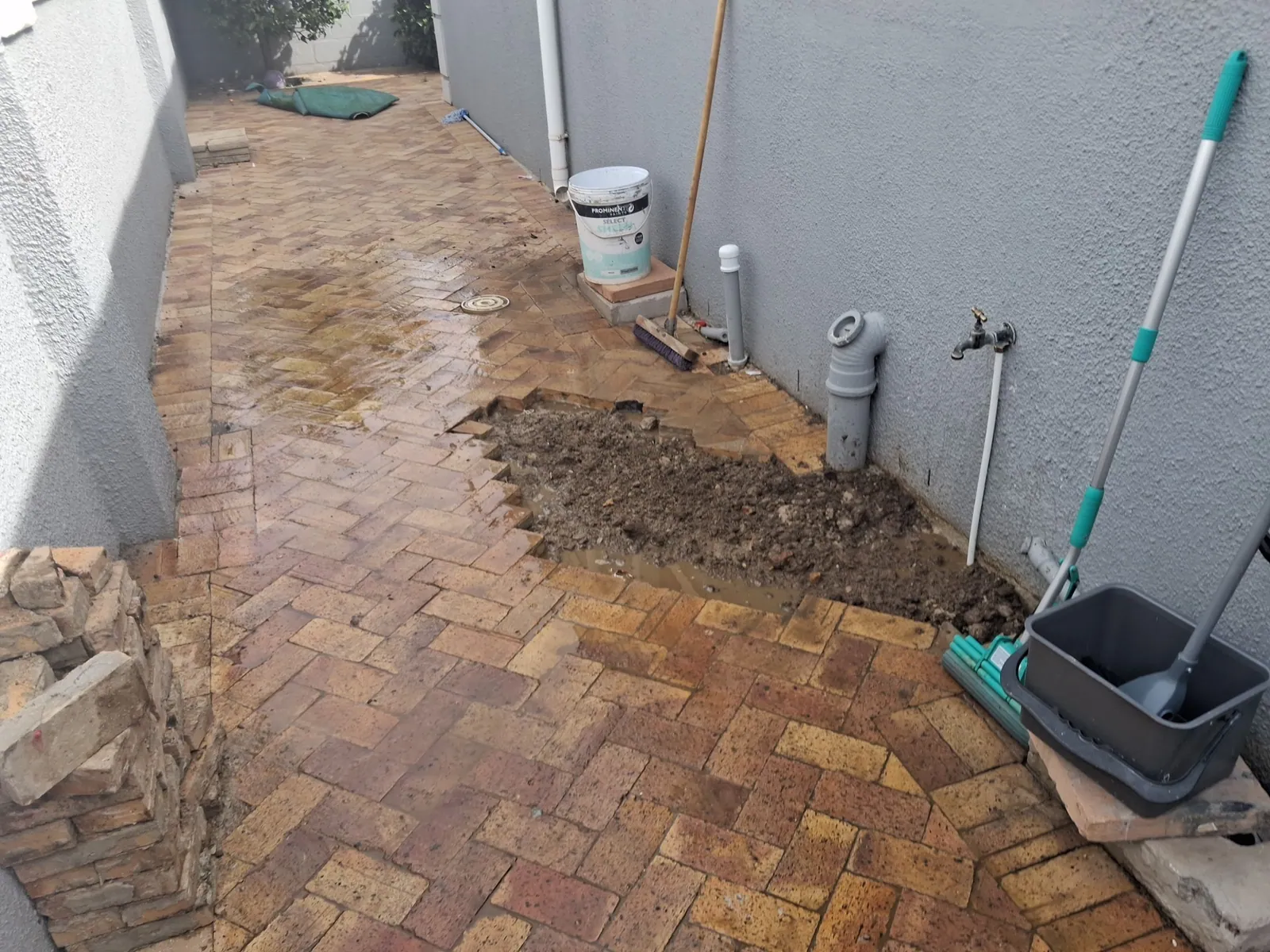
Small opening in the paving, right on the leak
“Good”
The homeowner’s rating, with no damage to the property
- The problem
- A rising water bill, a meter turning with no water in use, and water pushing up between the pavers beside the house.
- The solution
- Meter checks and acoustic equipment traced a burst garden-tap supply pipe to one patch of paving. Only the marked pavers were lifted.
- The outcome
- The pipe was repaired that afternoon, in under two hours on site. The meter stopped, and the homeowners rated the work “Good”.
Case at a glance
- Problem
- Wet paving, a rising water bill and a meter that kept turning.
- Location
- Somerset West
- Property type
- House
- Detection method
- Acoustic leak detection
- Time to find
- Under 2 hours on site, from first test to silent meter
- Outcome
- Burst garden-tap supply pipe found and fixed the same day.
“Good”, the homeowner’s rating on sign-off
The problem: “Why is the paving wet?”
It started the way many leaks do: with a water bill that didn’t make sense. Then the homeowners noticed the water meter turning even when nobody was using water. And along the narrow paved passage beside the house, water was pushing up between the pavers, leaving puddles that never dried.
Something underground was clearly wrong, but where? Lifting a whole walkway to look for it would mean days of mess and a big bill.
The solution: reading the clues
- 1
Confirming the loss
The water meter was still registering high consumption with everything switched off, so this was a pressurised supply leak, not surface water.
- 2
Listening for it
With acoustic equipment on the garden tap beside the house, our technician picked up the hiss of water escaping under pressure.
- 3
Following the water
Water was seeping out at the rodding eye, the drain access point in the passage. Leaking water often finds the easiest path, and a drain trench is a classic one.
- 4
Marking the spot
Putting the clues together, the leak was narrowed down to one patch of paving beside the house and marked for opening.
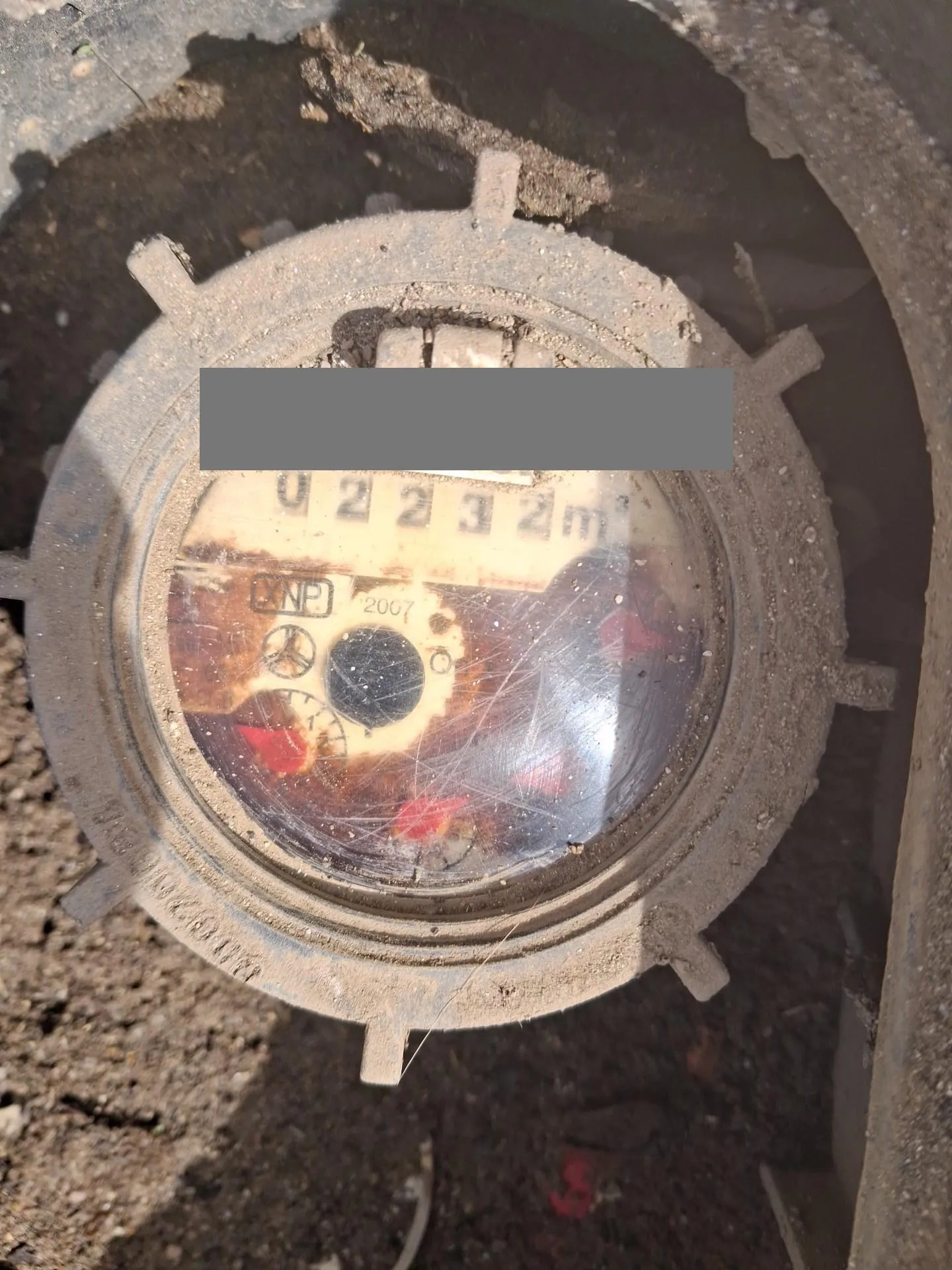
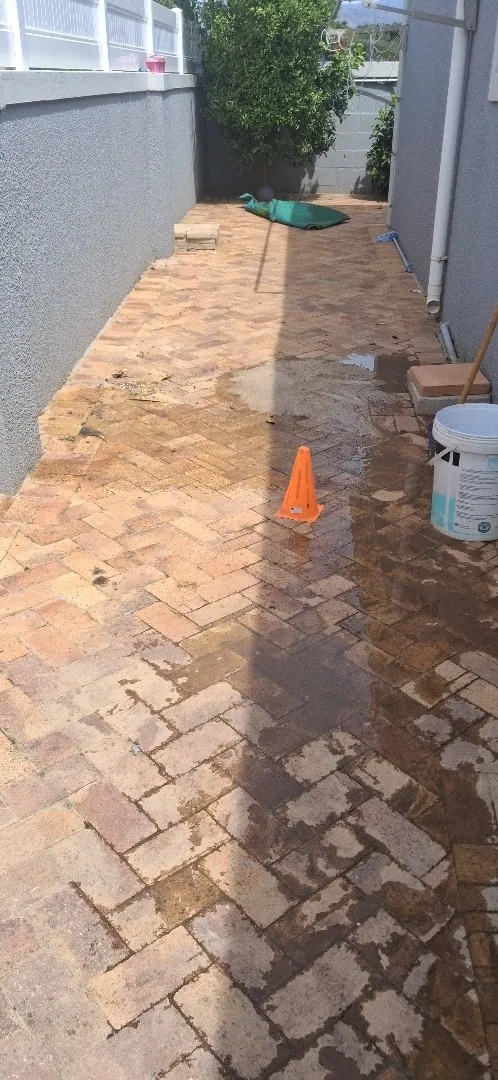
The culprit: a burst pipe to the garden tap
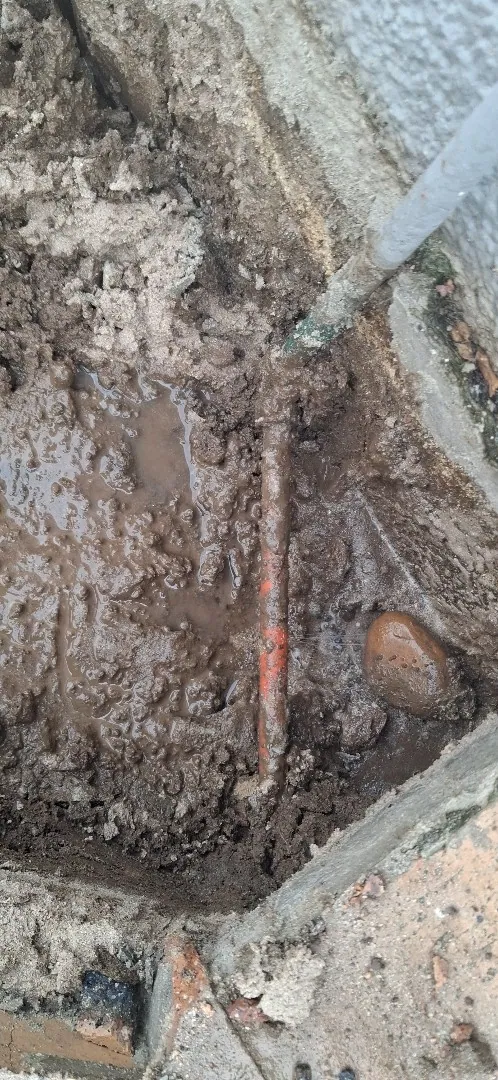
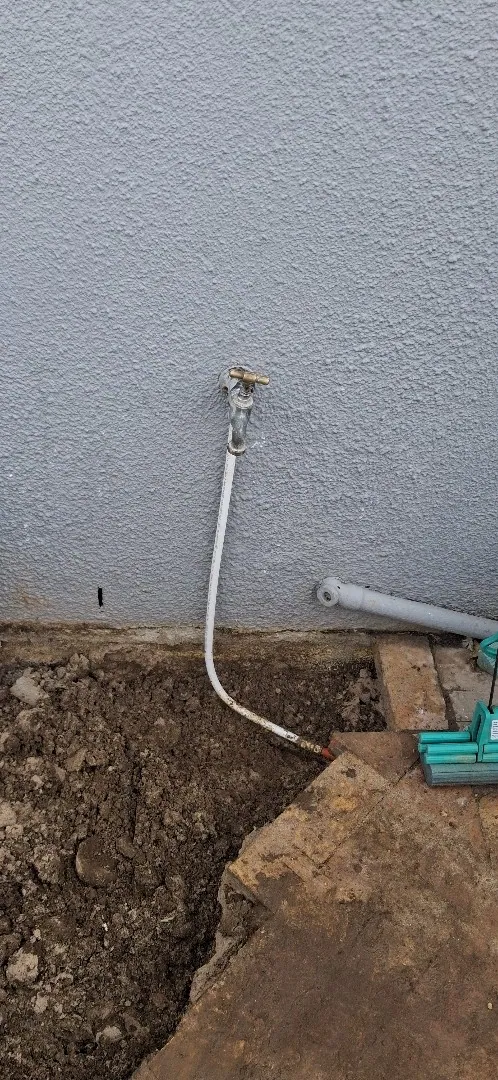
Our technician lifted only the marked pavers. Just below the surface sat the cold-water supply to the garden tap: a 15 mm polycop pipe that had burst. Under mains pressure it was pushing water into the soil, along the drain line, and up through the gaps in the paving.
The outcome: fixed the same afternoon
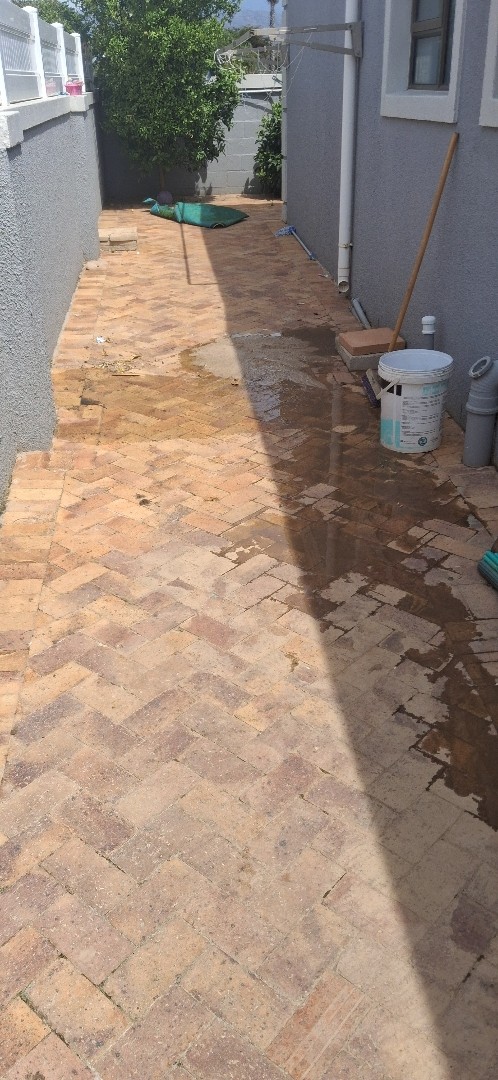
The damaged section was cut out and replaced with new 15 mm multilayer pipe. Then our technician checked the meter again: no more consumption loss. The paving was left neat and ready for the homeowners’ contractor to relay, and the passage could finally dry out.
No further water loss after the repair. From the first test to a silent meter took under two hours, on the same day the homeowners first called.
The homeowners’ sign-off. On the job completion form, the homeowners rated our work “Good”, confirmed that leak detection had been carried out, and confirmed that nothing on their property was damaged.
Meter: stopped.
Why a wet patch of paving deserves a call
For the budget
A burst supply pipe runs 24 hours a day. Every hour it goes unnoticed shows up on the municipal water bill.
For the property
Water under paving washes out the sand bed, which leads to sinking, uneven pavers, and over time it can creep towards walls and foundations.
For the Western Cape
In a region that knows what drought feels like, every litre kept in the pipes counts.
Spot the signs early
Water appearing between pavers in dry weather, a drain or rodding eye that’s always damp, a sudden jump in your water bill, or a meter that moves when every tap is closed: any one of these is worth checking. Close all taps and watch your meter for a few minutes. If it still moves, call us.
Frequently asked questions
Why is water coming up between my pavers?
If it hasn’t rained and no tap is running, it’s often a leaking supply pipe underneath. The water follows the path of least resistance, often along drain trenches, and surfaces through gaps in the paving.
What is a rodding eye, and why is it wet?
A rodding eye is an access point for clearing your drains. If clean water is seeping out around it, a pressurised pipe nearby may be leaking into the drain trench.
Will you have to lift all my paving?
We pinpoint the leak first with meter checks and acoustic equipment, then open the affected area for repair. In this case, only the pavers directly above the leak were lifted.
Does insurance cover leak detection?
Many home insurance policies cover concealed pipe leaks and their detection. We regularly work with insurers, so check your policy or ask us when you call.
Do you work in Somerset West and the Helderberg?
Yes. We help homes and businesses across Somerset West, Stellenbosch, Cape Town and the wider Western Cape.